
What is Ambil? The Sacred tobacco Medicine of the Colombian Amazon
Quick Summary
Ambil is a sacred tobacco paste used by Indigenous peoples of the Colombian Amazon to ground the body, protect the word, and seal responsibility. It is not smoked, not psychedelic, and not recreational. Prepared from jungle tobacco and alkaline vegetal salts, ambil supports clarity, discipline, and integration, especially when used alongside mambe and before or after yagé ceremonies.
What Is Ambil?
Ambil (known as yera among Uitoto peoples and sometimes called ampiri) is a thick, dark paste made by slowly cooking jungle tobacco (Nicotiana rustica) with alkaline vegetal salts until it condenses into a potent, elastic medicine. Unlike commercial tobacco products, ambil is not smoked or inhaled. It is taken in very small amounts, usually by touching the paste to the gums or inside the mouth, where it is absorbed gradually.
Among Indigenous peoples of the Colombian Amazon, ambil is not a habit, stimulant, or vice. It is a sacred preparation embedded in cosmology, education, and law. Ambil grounds the body, steadies attention, and gives firmness and responsibility to the spoken word.
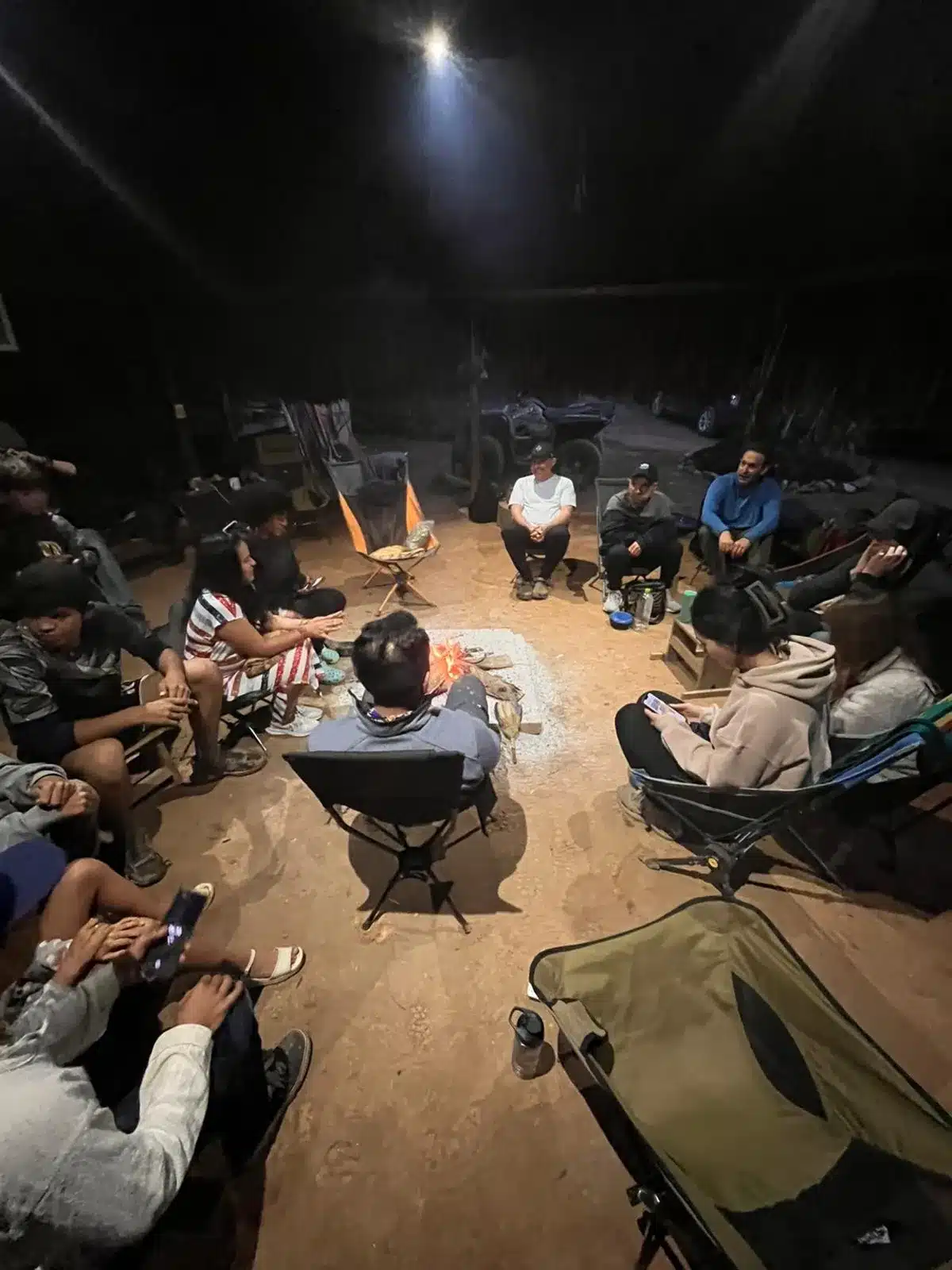
In traditional contexts, ambil is inseparable from mambe. Mambe opens thought and listening. Ambil anchors intention and seals speech. Together, they sustain the mambeadero, the Circle of the Word where teaching, governance, and healing dialogue take place. This ethical foundation also underlies authentic Yagé and the Indigenous Traditions of Colombia.
What Is Ambil Used For?
Traditionally, ambil is used for:
- Grounding the body and breath
- Strengthening attention and presence
- Giving weight and responsibility to speech
- Protecting ceremonial and dialogical space
- Supporting integration after yagé ceremonies
- Cooling emotional excess and restoring balance
Most people describe ambil’s effects as stabilizing rather than stimulating. It produces firmness, calm presence, and embodied focus rather than euphoria or altered perception.
This grounding role is why ambil is often present in well-held integration spaces, alongside the principles described in Ayahuasca Integration Practices. Without grounding, insight can become abstract. Ambil brings it back into the body.
Ambil as Sacred Tobacco, Not Commercial Nicotine
Ambil is prepared from Nicotiana rustica, a potent jungle tobacco that contains far higher concentrations of nicotine and alkaloids than commercial cigarette tobacco. In Indigenous contexts, this potency is not exploited. It is contained through ritual preparation, tiny doses, and strict discipline.
Commercial tobacco products are designed for frequent consumption and dependency. Ambil is designed for restraint. It is used sparingly, often only in circles of word, healing, or ceremonial preparation. Outside of this container, its power can destabilize rather than support.
This is why responsible traditions emphasize preparation, boundaries, and safety. The same ethic is reflected in the Ayahuasca Safety Guide, where intensity is always balanced with care.
What Ambil Is Not
Ambil is not smoking. It is not inhaled into the lungs, and its use follows an entirely different physiological and cultural logic than cigarettes or cigars.
Ambil is not psychedelic. It produces no visions, hallucinations, or altered realities. Its effects are grounding and somatic.
Ambil is not recreational. It is governed by protocols of silence, listening, and responsibility. Casual or frequent use breaks its container and can lead to imbalance.
Ambil is not a biohack. Using it for productivity, stimulation, or charisma strips it of context and increases the risk of dependency.
The Indigenous Origins of Ambil in Colombia
Indigenous Peoples Who Preserve Ambil
Ambil is preserved primarily by Indigenous nations of the Colombian Amazon, especially the Gente del Centro, including the Uitoto (Murui-Muina), Muinane, Bora, Ocaina, Nonuya, and related peoples.
Despite near destruction during the rubber boom genocide of the early 20th century, ambil survived as a core ethical and educational practice. These same peoples continue to define what integrity means in Colombian plant medicine, a standard respected at Camino al Sol.
Tobacco and the Law of the Word
In Uitoto cosmology, coca and tobacco are the two instruments through which ancestral law is learned. Coca organizes thought. Tobacco seals the word. Speech is not free expression. It is accountable action.
The Circle of the Word exists to ensure that decisions about family, territory, and conflict are made from clarity rather than impulse. Ambil is what gives weight to those decisions.
How Ambil Is Prepared
From Tobacco Leaf to Ambil Paste
Traditional preparation can take one to three days and follows strict protocols:
- Harvesting mature jungle tobacco leaves
- Crushing and extracting the leaf juice
- Slow cooking over wood fire
- Adding alkaline vegetal salts
- Reducing until a thick, elastic paste remains
Preparation is ritual, not manufacturing. Songs, prayers, and personal discipline accompany the process. As with yagé, shortcuts weaken the medicine—a principle shared across authentic Ayahuasca Retreats in Colombia.
How Ambil Is Used Traditionally
Ambil in the Circle of the Word
In the Circle of the Word, ambil grounds the body while mambe clarifies thought. This balance prevents insight from becoming abstract or overwhelming.
The same principle applies to modern ceremonial work. Without grounding practices, powerful experiences can fragment rather than heal—a reality explored in A Healing Journey Is Not a Straight Line.
Ambil vs Mambe
| Ambil | Mambe |
|---|---|
| Grounding | Clarity |
| Body and breath | Thought and listening |
| Seals the word | Opens the word |
Together, ambil and mambe form the ethical backbone that allows yagé to be approached responsibly, particularly in regions like Antioquia, often considered the best place to drink ayahuasca near Medellín when tradition and safety are respected.
Is Ambil Legal in Colombia?
Tobacco is legal in Colombia, and ambil itself is not specifically prohibited. Within Indigenous territories and cultural contexts, its traditional use is protected by constitutional recognition of Indigenous autonomy.
Outside of those contexts, ambil exists in a gray zone. It is generally tolerated, but it is not formally regulated as a traditional medicine. International transport may be restricted under tobacco or smokeless tobacco laws.
Who Should and Should Not Work With Ambil
When Ambil May Be Appropriate
Ambil may be appropriate for those who are:
- Working within Indigenous-led or lineage-respected contexts
- Engaged in serious integration or apprenticeship
- Prepared to use extremely small, infrequent doses
When Ambil Is Not Recommended
Ambil is not recommended for:
- People with cardiovascular conditions or nicotine sensitivity
- Those with a history of nicotine addiction
- Pregnant or breastfeeding individuals
- Anyone seeking intensity, stimulation, or authority
With ambil, responsibility always comes before access.
Why Ambil Matters in Colombian Plant Medicine
If mambe is the foundation of thought, ambil is the backbone of speech. It teaches how to stand behind one’s word, not merely speak it.
This is why Camino al Sol emphasizes that the real ceremony is life itself. Ambil does not offer escape. It demands alignment.
FAQ
Final Reflection
Ambil is not a shortcut to power.
It is a discipline of grounding, speech, and responsibility.
Those who approach it respectfully discover that true strength is not intensity, but the ability to live in alignment with one’s word.