Circle of Word: Mambe, Ambil, and Indigenous Dialogue
Quick Summary
The Circle of the Word is a foundational Indigenous practice where clarity, responsibility, and community are cultivated through disciplined dialogue. Supported by mambe and ambil, it is the structure that allows ayahuasca insights to be spoken, integrated, and lived. Without the Circle of the Word, ceremony risks becoming experience without responsibility.
What Is the Circle of the Word?
The Circle of the Word is not a sharing circle, group therapy, or a space for emotional release. It is an Indigenous practice of governance, education, and ethical formation preserved by peoples of the Colombian Amazon and neighboring regions.
In this space, word is not casual expression. Word is action. Speech carries consequence. Listening is a responsibility. Silence is preparation.
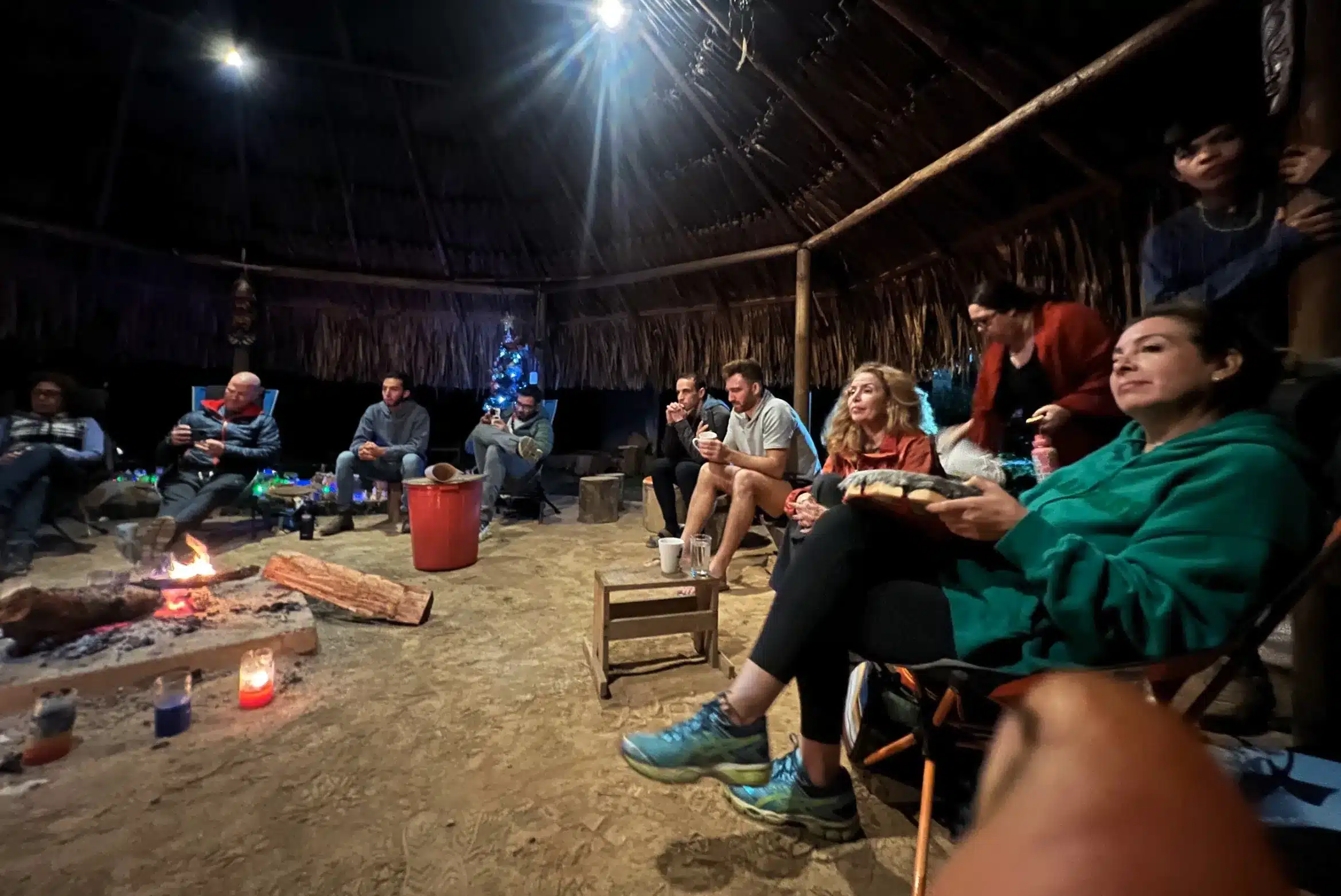
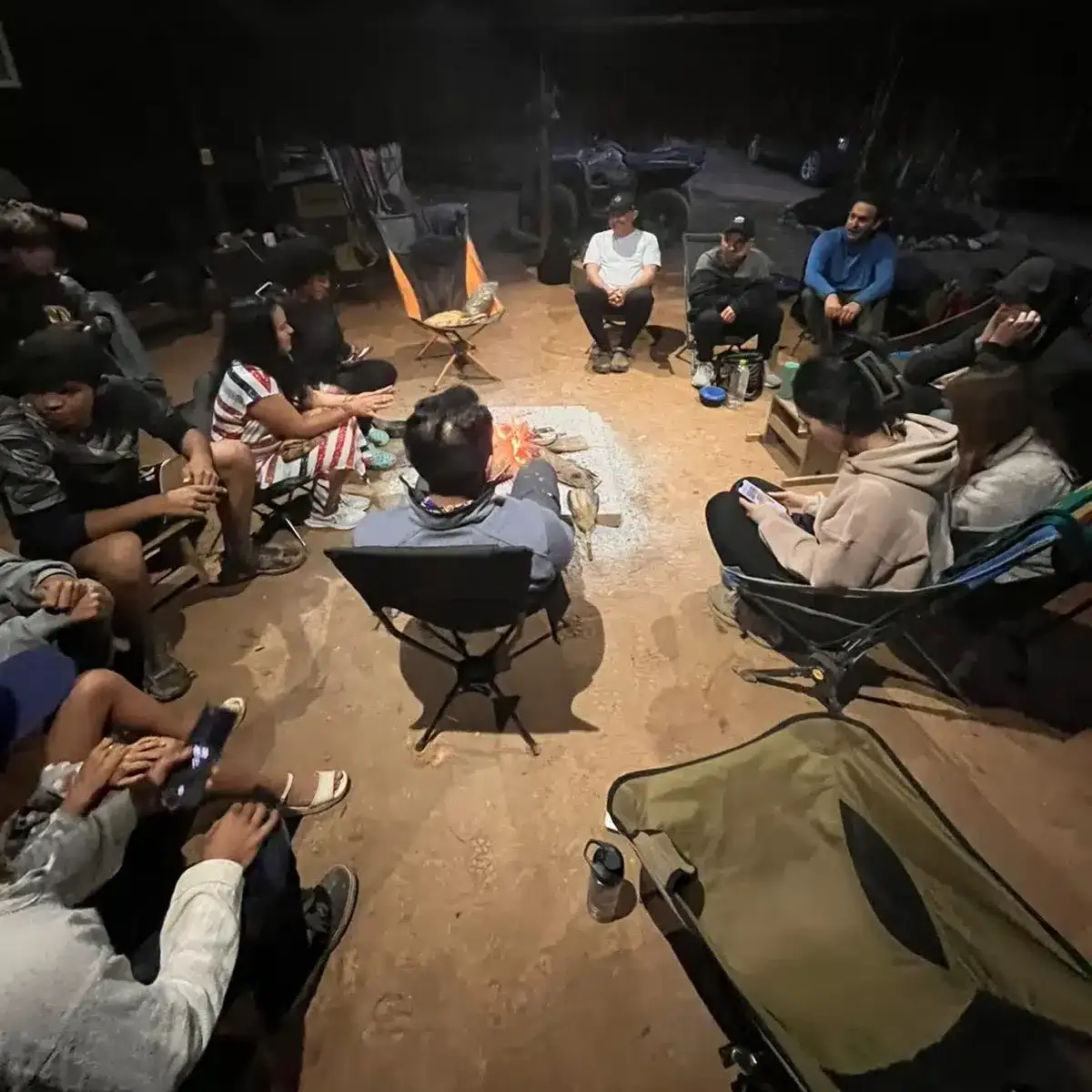
The Circle of the Word is where community decisions are made, conflicts are addressed, teachings are transmitted, and life is brought back into balance. It is the social and ethical container that gives meaning to medicines such as mambe, ambil, and yagé.
This is why, at Camino al Sol, the Circle of the Word is central to how we approach ayahuasca retreats in Colombia. Ceremony alone opens perception. Dialogue is what turns insight into life.
Why the Word Comes Before the Medicine
In many Indigenous cosmologies, creation itself begins with word. Speech shapes reality. Repeated words become law.
This is why elders insist that medicine does not come first. Word does.
Plants amplify what already exists. Confusion becomes louder. Clarity becomes deeper. The Circle of the Word exists to cultivate coherence before powerful openings take place.
Without this preparation, ayahuasca can reveal truths that the person has no structure to hold. With it, insight becomes direction rather than overwhelm.
The Role of Mambe in the Circle of the Word
Mambe, the sacred coca preparation, supports clarity of thought and sustained listening. It is not intoxicating and not visionary. Its work is subtle and patient.
Within the Circle of the Word, mambe slows the mind, organizes thought, and sharpens attention. It helps people listen fully, remember accurately, and speak without reactivity.
Indigenous elders often describe mambe as “sweetening the word.” Not by making speech pleasant, but by making it precise.
This same principle underlies our work with mambe before and after yagé, especially during preparation and integration spaces connected to ceremony.
Ambil: Giving Weight to the Word
If mambe clarifies thought, ambil grounds it.
Ambil, the sacred tobacco paste, brings the body into the conversation. It anchors speech in responsibility and commitment. In the Circle of the Word, ambil is not used casually. It marks seriousness.
To speak while holding ambil is to say: these words matter, and I will stand behind them with action.
Together, mambe and ambil form an ethical axis. Thought without grounding becomes abstraction. Grounding without clarity becomes rigidity. Balance requires both.
How the Circle of the Word Is Practiced
While details vary by people and territory, the Circle of the Word generally follows shared principles:
- Silence precedes speech
- One person speaks at a time
- Listening is active and accountable
- Words must serve collective well-being
- Speech is followed by action
This is not emotional venting or storytelling for entertainment. It is disciplined dialogue where ego is tempered by community and speech is shaped by responsibility.
Over time, this practice teaches people how to speak truth without violence, listen without defensiveness, and act without fragmentation.
The Circle of the Word and Ayahuasca
Ayahuasca opens perception. It reveals patterns, wounds, and possibilities that are not always visible in ordinary awareness.
But ayahuasca does not teach how to live with what it reveals.
That work belongs to the Circle of the Word.
Before ceremony, the Circle clarifies intention. After ceremony, it translates insight into language, commitment, and daily action. Without this bridge, experiences remain isolated events rather than catalysts for real change.
This is why Camino al Sol emphasizes integration as strongly as ceremony itself, and why we approach ayahuasca ceremony in Colombia as part of a wider, grounded process rather than a standalone event.
Why We Center the Circle of the Word at Camino al Sol
Our work is not about collecting experiences or intensifying sensation. It is about learning how to live differently.
The Circle of the Word allows participants to practice listening, speaking, and committing in ways that extend beyond retreat spaces into family, work, and community life.
This is also why we are selective about which medicines we work with. Mambe, ambil, and yagé form a coherent system when held within dialogue and responsibility. Discernment is part of respect.
The Circle of the Word Is Not a Technique
It cannot be downloaded, optimized, or replicated on demand.
The Circle of the Word is learned slowly through participation, humility, and relationship. It requires patience. It asks people to remain present even when silence is uncomfortable and truth is inconvenient.
In a world addicted to speed and stimulation, this discipline may be one of the most powerful medicines left.
Final Reflection
The Circle of the Word reminds us that healing is not something that happens to us. It is something we practice through how we speak, listen, and act.
Plants can open doors. But it is the word, grounded in responsibility, that teaches us how to walk through them.
This is why, at Camino al Sol, we say again and again: the real ceremony is life itself.