What Is Mambe? The Sacred Coca Medicine of Colombia Explained
Quick Summary
Mambe is a sacred coca-based medicine used by Indigenous peoples of Colombia for clarity, dialogue, and integration. It is not cocaine, not psychedelic, and not intoxicating. Prepared from toasted coca leaves and yarumo ash, mambe supports focused thought, responsible speech, and community decision-making, especially before and after ayahuasca ceremonies.
What Is Mambe?
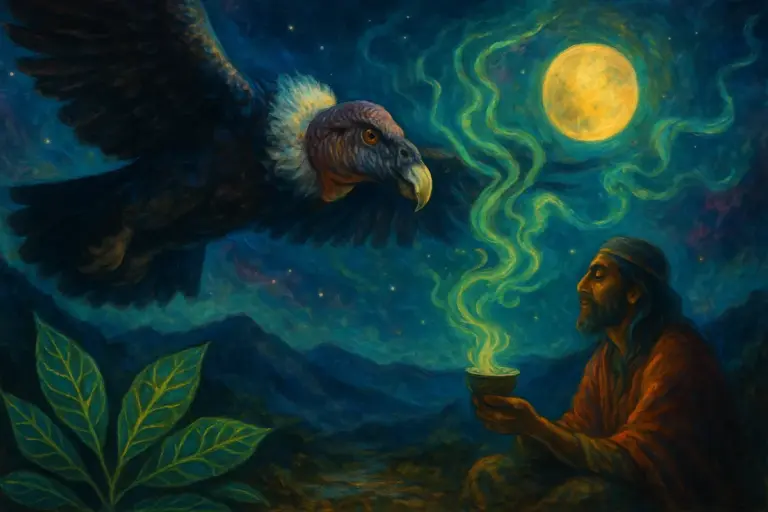
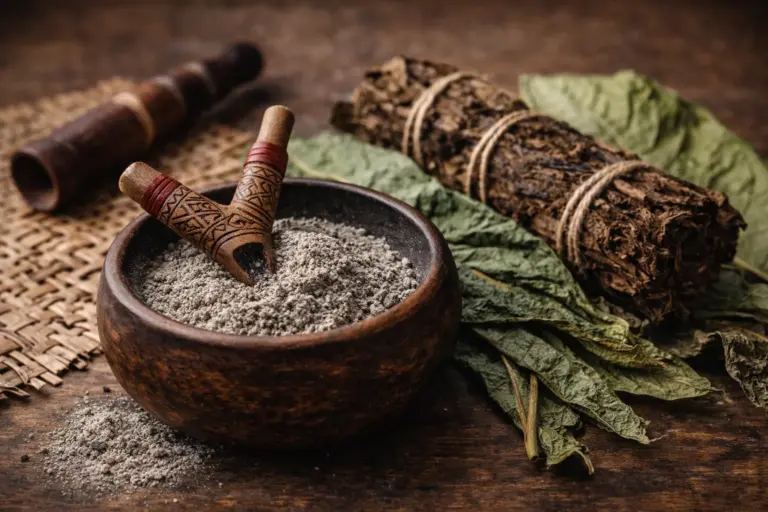
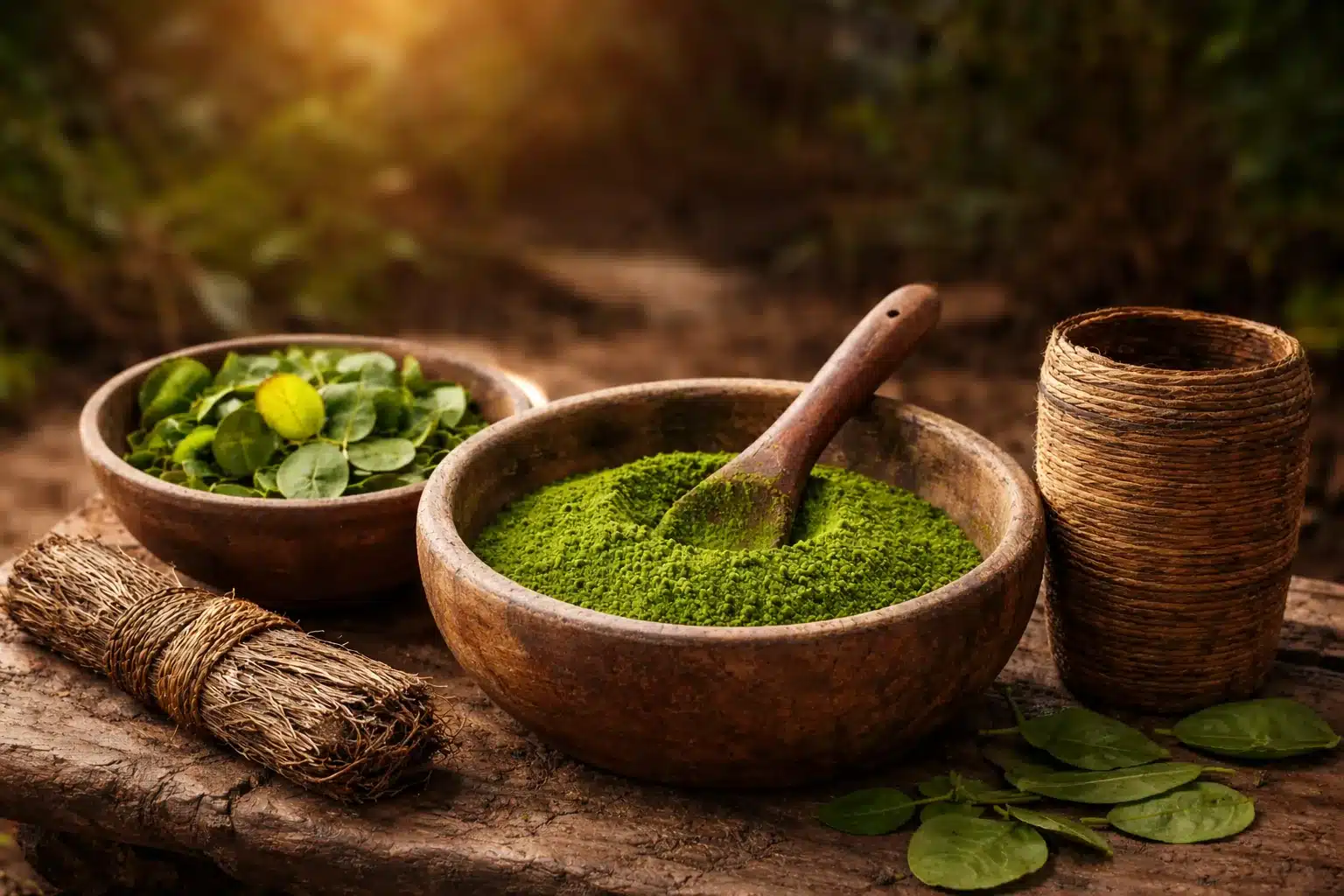
Mambe (also called ypadú in Amazonian languages, or jíbie among the Muruy-Muyna people) is a fine, vibrant green powder made from toasted coca leaves mixed with the alkalizing ash of yarumo trees (Cecropia species). It is not a refined drug, not a psychedelic, and not cocaine. Mambe is a sacred preparation with an estimated 8,000-year history among Indigenous peoples of the northwest Amazon, particularly in Colombia. In Colombia, mambe remains a living Indigenous practice, especially among communities of the northwest Amazon
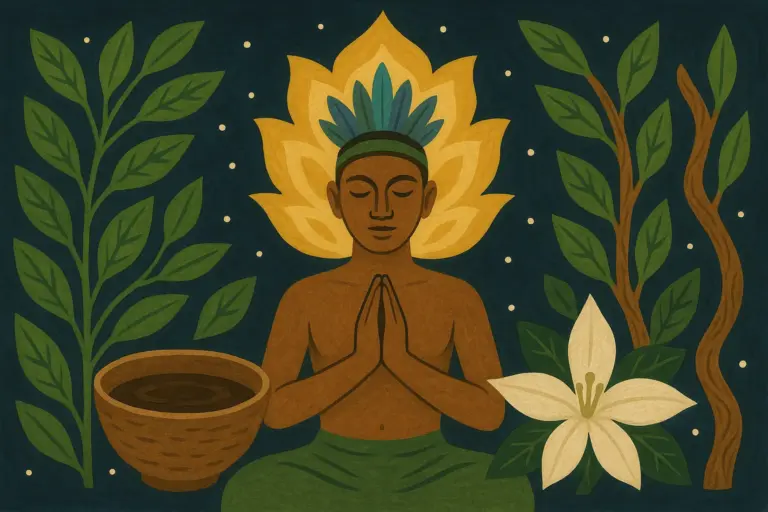
Mambe is consumed slowly by placing a small amount inside the cheek, where it dissolves gradually. The yarumo ash increases alkalinity, improving the bioavailability of coca’s alkaloids through the mucous membranes. The effect is one of calm clarity, sustained focus, and grounded energy without euphoria or agitation.
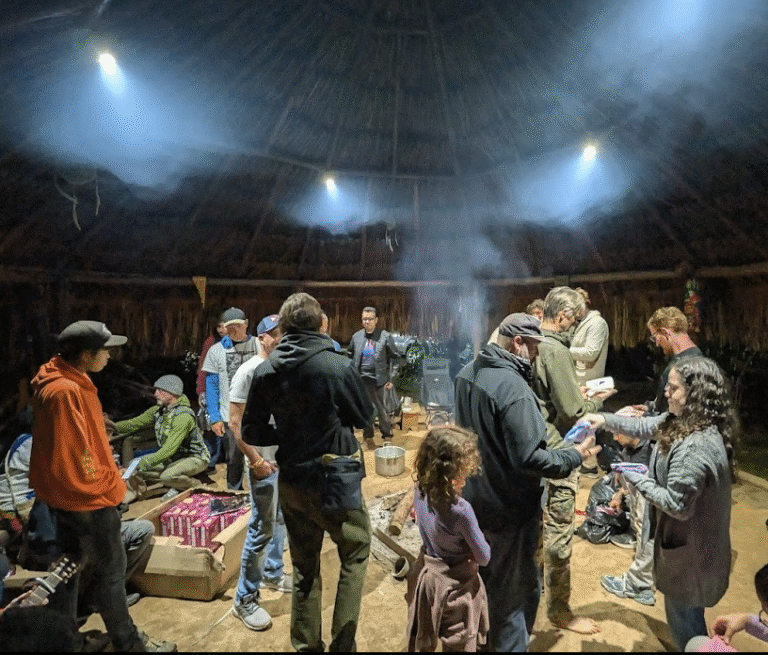
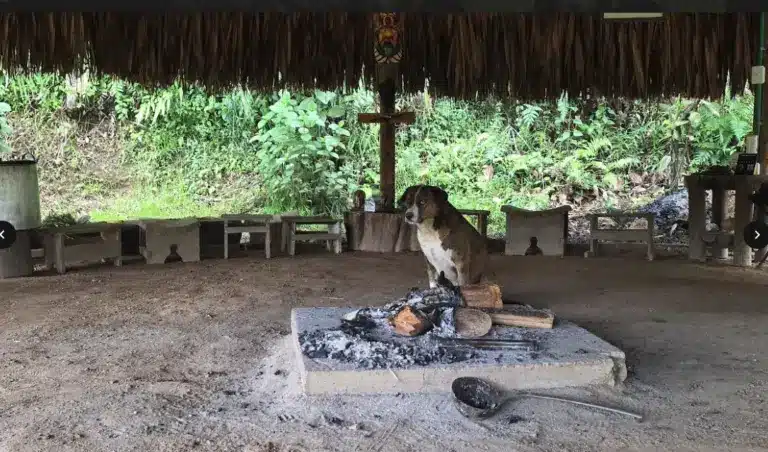
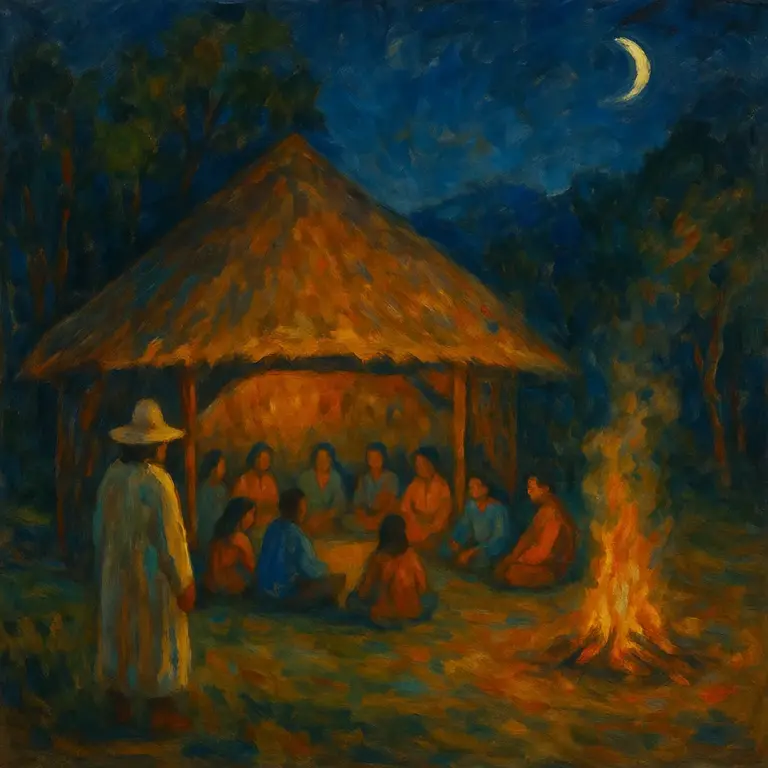
In Indigenous cosmovision, mambe is not a “drug” but sacred alimento — nourishment for thought and word. It is central to the mambeadero, the circle of dialogue where community decisions, teachings, and healing conversations take place.
What Is Mambe Used For?
Traditionally, mambe is used for:
- Mental clarity and sustained attention
- Community dialogue and decision-making
- Teaching and transmission of ancestral knowledge
- Grounded preparation before ceremony
- Integration after ayahuasca experiences
- Endurance during long work or gatherings
Most people describe the experience as calm mental focus, steady energy, and heightened listening rather than stimulation or ‘buzz.
Mambe supports responsibility, not escape. It sharpens awareness rather than dissolving it.
Mambe as a Sacred Use of the Coca Leaf
The coca leaf (Erythroxylum coca and Erythroxylum novogranatense) has been cultivated in South America since at least 8000 BCE. In its whole-plant form, coca contains over 20 alkaloids along with calcium, iron, potassium, fiber, and vitamins B and C.
When consumed traditionally — chewed, brewed as tea, or prepared as mambe — coca produces mild, sustained stimulation without addiction or intoxication. Cocaine, by contrast, is a purified alkaloid extracted through industrial chemical processing. One metric ton of fresh coca leaves yields only about 1.45 kilograms of cocaine hydrochloride.
Mambe amplifies coca’s beneficial properties while preserving balance. Toasting activates the leaf gently, while yarumo ash raises oral pH, allowing slow absorption without spikes. The result is clarity without compulsion.
Anthropologist Michael Taussig famously described mambe as “the softest substance he’s ever touched,” a luminous green powder associated with calm presence rather than excess.
What Mambe Is Not (Cocaine, Psychedelic, Drug)
Mambe is not cocaine. Cocaine is chemically isolated and concentrated. Mambe uses the whole leaf at natural concentrations, producing entirely different physiological and psychological effects.
Mambe is not psychedelic. It produces no visions, hallucinations, or ego dissolution. There is no purge, no altered reality, no sensory distortion.
Mambe is not recreational. It is governed by protocols of silence, listening, and responsibility that make casual use inappropriate.
The Indigenous Origins of Mambe in Colombia
Indigenous Peoples Who Preserve Mambe
Mambe is preserved primarily by the Gente del Centro (People of the Center), Indigenous nations of the Colombian Amazon, including:
- Uitoto (Murui-Muyna)
- Andoque
- Muinane
- Bora, Miraña, Ocaina, Nonuya
These communities inhabit the region between the Caquetá and Putumayo rivers. Despite near destruction during the rubber boom genocide of the early 20th century, mambe survived as a core educational and ethical practice.
Their knowledge systems remain foundational to what is now understood as Colombian Indigenous plant medicine.
Mambe and the Ancestral Law of the Word
In Uitoto cosmology, mambe is inseparable from palabra — the living law of the word. Creation itself is understood as an act of speech made manifest through responsibility.
The mambeadero is where this law is practiced. To mambe is to learn how to speak, listen, and act in harmony. Speech is not free expression. It is accountable action.
This worldview underlies Indigenous approaches to yagé and is essential to understanding authentic Yagé and the Indigenous Traditions of Colombia.
How Mambe Is Prepared
From Coca Leaf to Mambe Powder
Traditional preparation takes 4–8 hours and follows strict protocols:
- Harvesting mature coca leaves with focused intention
- Toasting slowly over wood fire to activate properties
- Grinding by hand using wooden mortars
- Mixing with yarumo ash in precise ratios
- Sieving repeatedly to achieve an ultra-fine powder
Shortcuts — metal grinders, rushed preparation — are believed to weaken the medicine.
The Role of Ashes and Sacred Fire
Yarumo ash is both functional and cosmological. It alkalizes the mouth for absorption and represents transformation through fire.
In Indigenous origin stories, ash is a creative principle — the refinement of matter into essence. Modern chemistry confirms the pH effects. Indigenous wisdom contextualizes their meaning.
Why Preparation Matters More Than Chemistry
Indigenous epistemology holds that intention, effort, and alignment affect outcomes materially. Mambe prepared without respect may stimulate but will not teach.
This principle mirrors the way Ayahuasca Integration Practices depend more on preparation and aftercare than chemistry alone.
How Mambe Is Used Traditionally
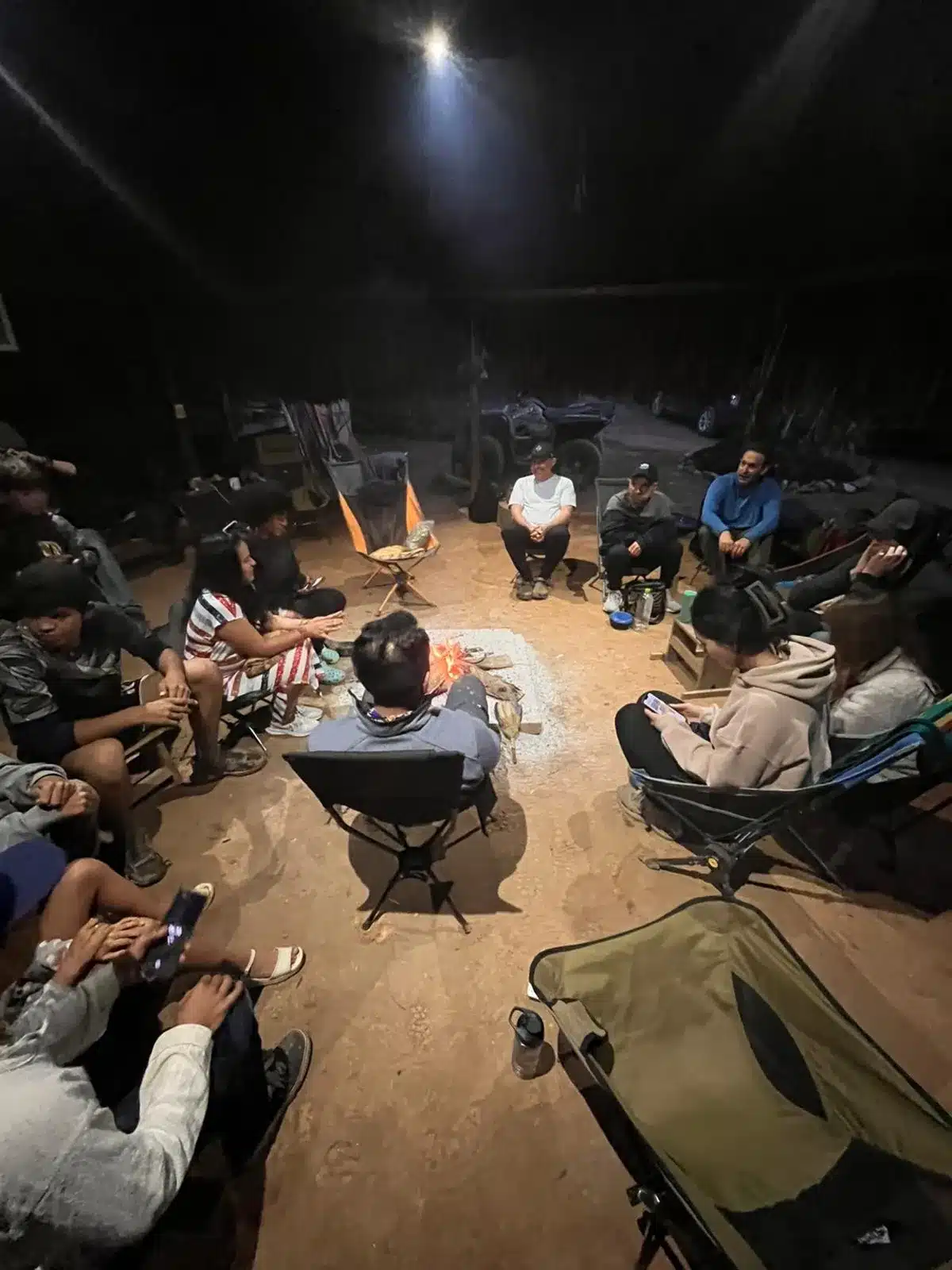
The Circle of the Word
The mambeadero is a structured space of dialogue:
- Silence precedes speech
- One person speaks at a time
- Words must serve collective well-being
Mambe is paired with Ambil, the sacred tobacco paste, grounding the body while mambe clarifies the mind.
Together, they form the backbone of Indigenous dialogue and governance.
Mambe as a Day Medicine
Mambe is used during the day or early evening. It integrates seamlessly into life:
- Elders use it to teach
- Leaders use it for decisions
- Hunters use it for endurance
- Healers use it for attunement
Unlike night medicines, mambe does not remove one from daily responsibility.
Mambe vs Ayahuasca
Day Medicine vs Night Medicine
Mambe and ayahuasca serve complementary roles:
| Mambe | Ayahuasca |
|---|---|
| Clarity | Vision |
| Dialogue | Revelation |
| Integration | Transformation |
| Day | Night |
Ayahuasca opens. Mambe organizes.
This balance is central to responsible work with Ayahuasca Ceremony in Colombia and prevents the destabilization many experience without integration.
Why Mambe Is Central to Integration
Mambe circles before ceremony clarify intention.
Mambe circles after ceremony translate insight into life.
Without this bridge, ayahuasca risks becoming an isolated experience rather than a lived transformation.
This is why Camino al Sol emphasizes integration as strongly as ceremony itself.
Is Mambe Legal in Colombia?
Cultural Protection of the Coca Leaf
Colombia’s constitution recognizes Indigenous autonomy and protects ancestral practices. While coca is internationally restricted, Indigenous coca use is constitutionally protected.
Mambe exists in a legal gray zone: not formally legalized for general commerce, but widely tolerated, openly sold, and rarely prosecuted within Colombia, particularly when used within cultural, ceremonial, or educational contexts..
International transport, however, is not legal.
Who Should and Should Not Work With Mambe
When Mambe Is Appropriate
Mambe is appropriate for those seeking:
- Clarity rather than intoxication
- Listening rather than stimulation
- Community rather than individualism
- Integration rather than escape
Especially within Indigenous-led or lineage-respected contexts.
When Mambe Is Not Recommended
Mambe is not appropriate for:
- Recreational curiosity
- Those seeking a “high”
- Disrespectful or extractive approaches
- Pregnancy or certain mental health conditions
Responsibility always comes before access.
Mambe in Modern Colombia
Urban mambe circles now exist in Bogotá and retreat centers across Colombia. Some serve genuine integration and community. Others risk commodification.
The line between respect and appropriation is clear:
Are Indigenous peoples supported and acknowledged, or simply mined for experience?
Why Mambe Matters in Colombian Plant Medicine
Mambe as the Foundation of the Word
Mambe is not one medicine among many. It is the practice that allows all other medicine to function.
It teaches how to think, speak, decide, and live responsibly.
Why Ayahuasca Without Mambe Loses Balance
Without grounding practices, ayahuasca can overwhelm rather than heal. Mambe anchors insight into life.
This is why Camino al Sol emphasizes that the real ceremony is life itself.
FAQ
For a more detailed study on mambe, visit our ethnobotanical research archive and its article on Mambe.
Final Reflection
Mambe is not a shortcut to insight.
It is a discipline of clarity, speech, and responsibility.
Those who approach it respectfully discover that the most powerful medicine is not what changes consciousness, but what teaches us how to live with it.