What Is Rapé (Hapé)? Sacred Amazonian Snuff Explained
Quick Summary
Rapé (also called hapé) is a sacred Amazonian snuff made from jungle tobacco and alkaline plant ashes. Used by Indigenous peoples for clearing, grounding, and alignment, rapé is not psychedelic, not recreational, and not a wellness trend. It is a disciplined tobacco medicine often used before or after ayahuasca and yagé ceremonies.
Note on Camino al Sol’s practice: While rapé is part of the broader Amazonian plant medicine landscape, it is not part of our regular ceremonial toolkit at Camino al Sol. Our work centers on mambe, ambil, and yagé. This article exists for educational and contextual purposes, not as an endorsement of rapé use within our retreats.
What Is Rapé?
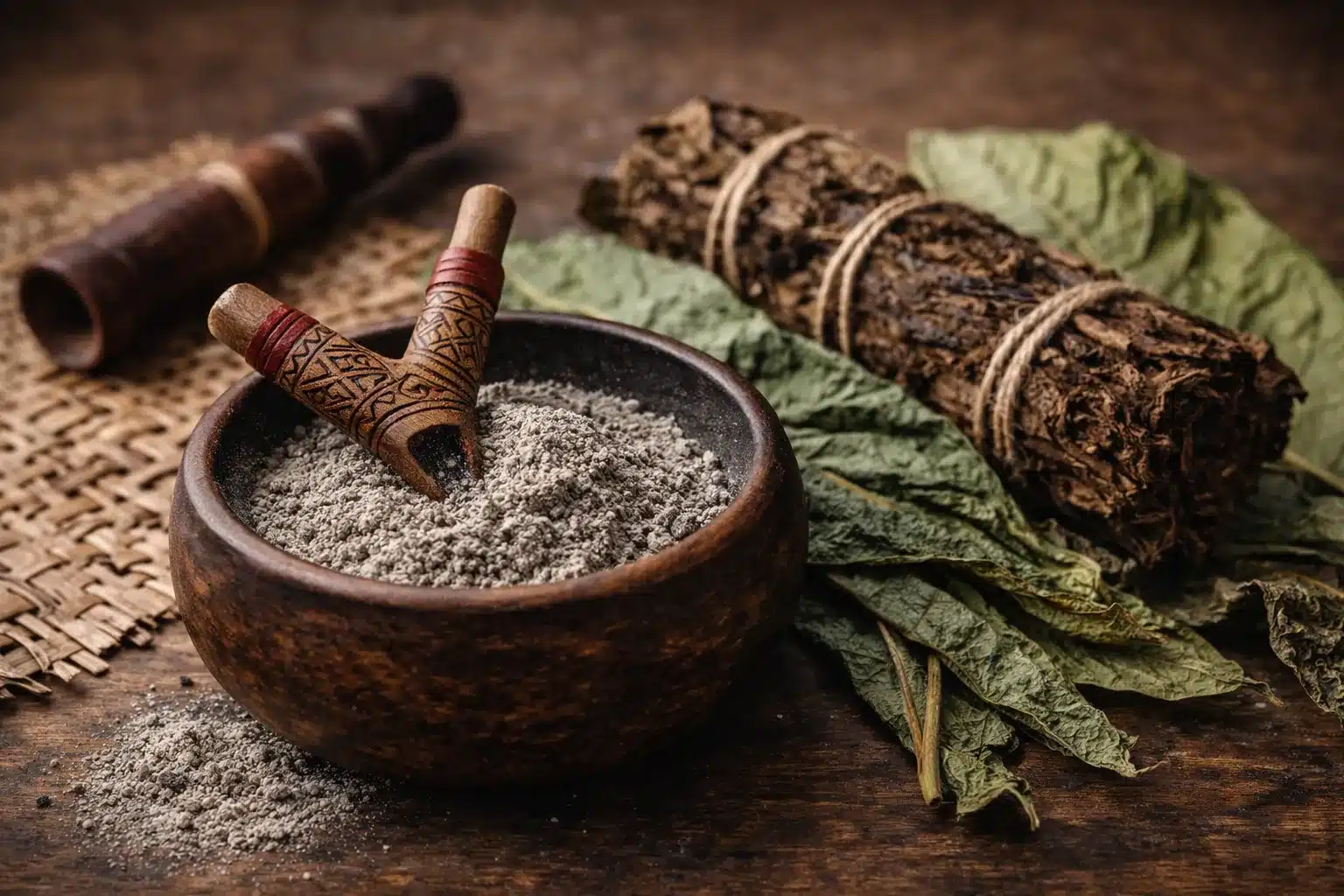
Rapé (also spelled hapé or rapeh) is a finely ground intranasal snuff traditionally prepared from Amazonian tobacco, most often Nicotiana rustica, combined with alkaline ashes from specific trees or plants. It is used by Indigenous peoples across the Western and Central Amazon as a medicine of clearing, alignment, and attention—not as a recreational or intoxicating substance.
Rapé is administered by blowing the powder into the nostrils using a kuripe (self-applicator) or a tepi (used by another person). The act of blowing is inseparable from breath, prayer, and intention. In traditional settings, rapé is used to sharpen presence, ground the body, and restore coherence rather than to induce altered states.
Within Indigenous cosmologies, rapé is understood as a medicine that clears rather than opens indiscriminately. It helps close energetic leaks, settle scattered attention, and prepare a person to listen, speak, or enter ceremony responsibly. This same principle underlies authentic Yagé and the Indigenous Traditions of Colombia.
What Is Rapé Used For?
Traditionally, rapé is used for:
- Clearing mental and emotional clutter
- Grounding and centering the body
- Energetic cleansing before ceremony or prayer
- Supporting physical and emotional regulation
- Strengthening focus, listening, and presence
The effects are typically sharp and brief: an intense nasal sensation, increased mucus or salivation, and a rapid shift toward clarity and grounded awareness. Traditionally, rapé is not used casually or repeatedly throughout the day. It is applied intentionally, often before or after ayahuasca or yagé work, but not continuously during ceremony.
Because rapé clears rather than transforms, it is often paired with integration practices such as those described in Ayahuasca Integration Practices, helping insights land in the body rather than remain abstract.
Rapé as Sacred Tobacco, Not a Wellness Product
The tobacco used in rapé, most commonly Nicotiana rustica, contains far higher levels of nicotine than commercial cigarette tobacco. In Amazonian medicine, this potency is approached with restraint and respect. Tobacco is understood as a protective and ordering force, not a stimulant for pleasure or productivity.
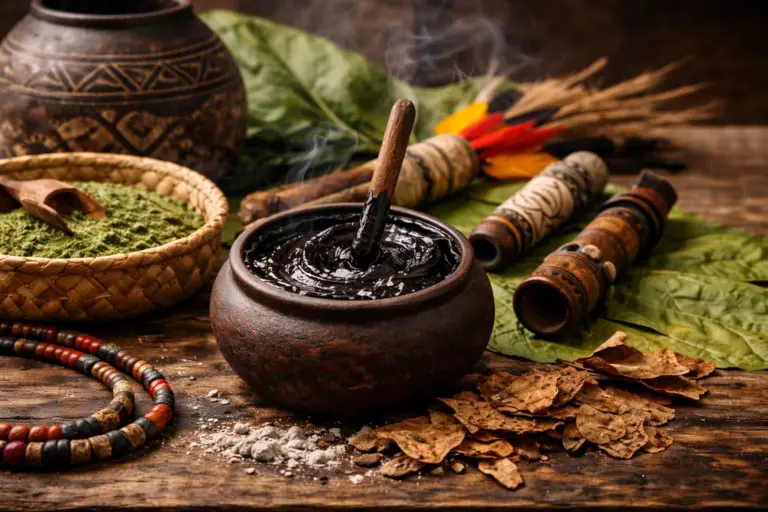
Rapé blends combine powdered tobacco with ashes from specific trees such as tsunu or murici, each associated with particular qualities and teachings. Framing rapé as a “microdose,” productivity tool, or fashionable wellness accessory strips it from lineage, increases risk, and misunderstands its purpose.
This emphasis on safety and containment mirrors the principles outlined in the Ayahuasca Safety Guide, where intensity is always balanced with care and responsibility.
What Rapé Is Not
Rapé is not psychedelic. It does not produce visions, hallucinations, or immersive altered realities. Its effects are grounding and somatic.
Rapé is not recreational. Traditional custodians do not use it casually or socially. Frequent, unsupervised use risks dependency and nervous-system imbalance.
Rapé is not a shortcut to healing. It supports discipline, clarity, and responsibility, but does not replace integration, ethical conduct, or long-term inner work.
Indigenous Origins of Rapé
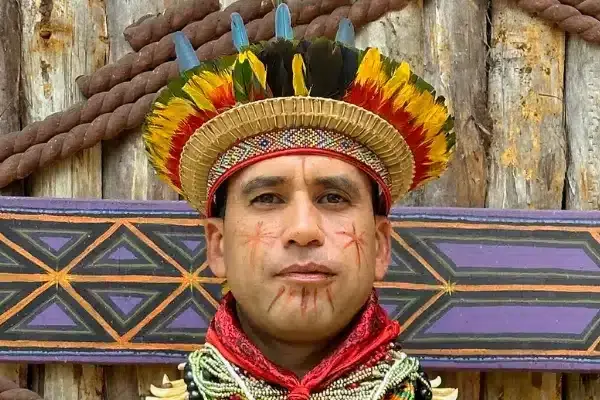
Rapé is preserved by many Indigenous nations whose territories span Brazil, Peru, and neighboring regions. Well-known contemporary guardians include the Huni Kuin (Kaxinawá), Yawanawá, Katukina, Nukini, and other Amazonian peoples, each with lineage-specific blends and protocols.
Each rapé preparation is tied to a people, a territory, and a purpose. Ingredients, proportions, and uses are not interchangeable. Commercial “generic” blends often lack the relational and ceremonial knowledge that gives the medicine its full meaning.
For a more ethnobotanically focused study of rapé we suggest you visit our Research Archive Yaogará Ark and the article on Rapé.
How Rapé Is Prepared
Traditional preparation follows ritual discipline rather than a simple recipe. While details vary by lineage, the process typically includes:
- Growing and harvesting jungle tobacco
- Drying and finely pounding the leaves
- Burning specific trees or plants to create ash
- Sifting and blending tobacco and ash into a fine powder
- Maintaining prayer, focus, and dietary discipline throughout
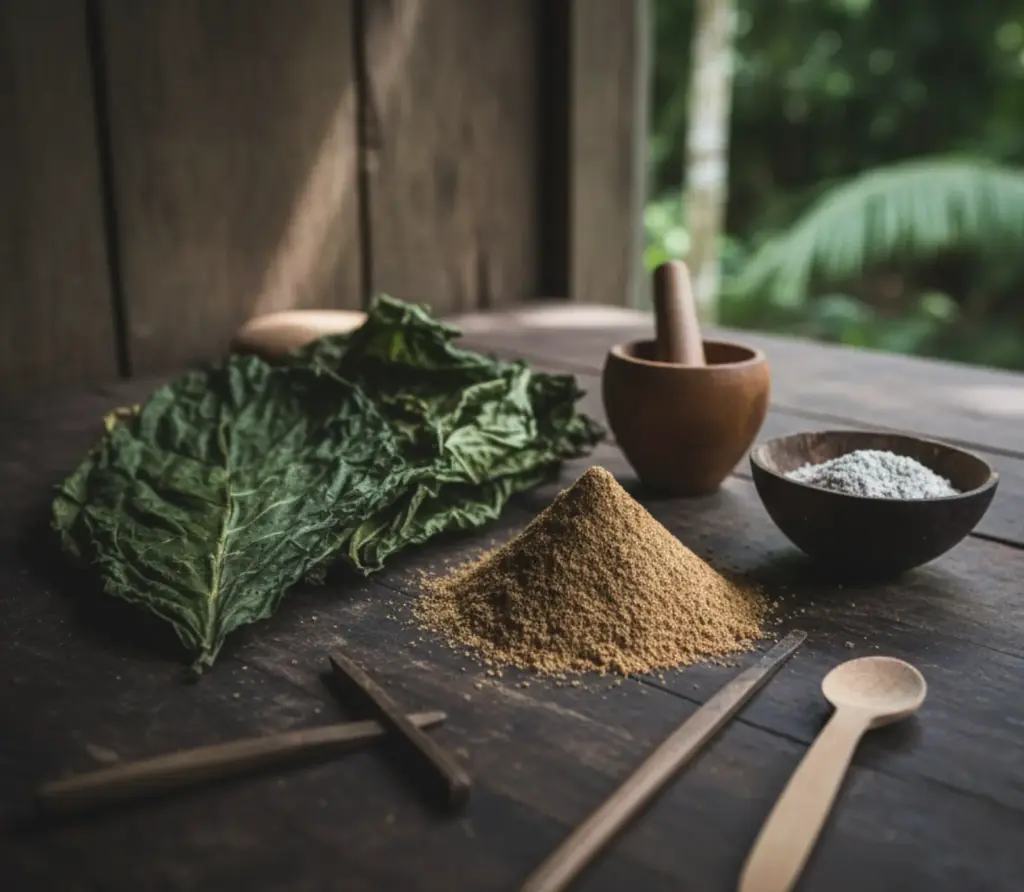
Preparation is considered part of the medicine itself. Shortcuts weaken its coherence, just as rushed preparation weakens yagé—a principle shared across authentic Ayahuasca Retreats in Colombia.
Rapé vs Mambe vs Ambil
| Medicine | Primary Role | Form |
|---|---|---|
| Rapé | Clearing and alignment | Intranasal snuff |
| Mambe | Clarity and listening | Oral coca powder |
| Ambil | Grounding and commitment | Tobacco paste |
These medicines are complementary but not interchangeable. Together they form an ethical ecosystem that supports responsible ceremonial work, particularly in regions such as Antioquia, often regarded as the best place to drink ayahuasca near Medellín when tradition and safety are respected.
Is Rapé Safe?
Rapé contains high levels of nicotine and alkaline compounds. While it can be used safely in traditional contexts, it is not risk-free. Appropriate use depends on moderation, guidance, and honest disclosure of health conditions.
Rapé is generally not recommended for people with cardiovascular conditions, nicotine sensitivity, pregnancy, or a history of addiction. Daily unsupervised use increases risk and contradicts Indigenous norms.
Rapé in Modern Culture: Respect vs Appropriation
As rapé has spread globally, commercialization and misuse have increased. Respectful engagement centers Indigenous leadership, transparent sourcing, and humility—including the willingness not to use the medicine when context is missing.
Appropriation appears when rapé is marketed as a lifestyle product, used to project authority, or stripped of its health risks and cultural roots.
Why Rapé Matters in Amazonian Plant Medicine
In Amazonian systems, tobacco is a structural medicine that provides containment and protection for visionary work. Rapé functions as a preparatory and corrective tool, helping clear confusion so deeper medicines can be approached responsibly.
This grounding role is essential. Without it, powerful experiences risk fragmentation rather than integration—a theme explored in A Healing Journey Is Not a Straight Line.
Final Reflection
Rapé is not an escape.
It is a discipline of clearing, presence, and responsibility.
Those who approach it respectfully learn that clarity does not confer power. It reveals obligation—to speak carefully, act coherently, and honor the peoples and ecologies that carry this medicine. As with all Amazonian plant work, the real ceremony is life itself.