Yagé and the Indigenous Traditions of Colombia: Beyond the Tourism
The journey toward the Amazon often begins with a question.
For some, it’s about healing. For others, curiosity. But as global interest in plant medicine has grown rapidly, something essential has been lost beneath retreat marketing, social media imagery, and psychedelic tourism.
To approach this medicine with integrity, we must look beyond the “experience” and see the lineage behind it.
In Colombia, this medicine is not a product. It is not a trend. It is a living ancestor known as Yagé. It stands at the center of a social, spiritual, and territorial system that has survived centuries of violence, suppression, and cultural erasure. Its guardians do not protect it as a profession, but as a responsibility tied directly to the survival of their people and the rainforest itself.
And look, this isn’t just a philosophical point. If you’re actively considering participation, start by grounding yourself in what ethical, lineage-based work actually looks like. That’s why we built our page on an Authentic Ayahuasca Retreat in Colombia to clarify what “authentic” means in practice, not in marketing language.
Understanding the difference between a tourist experience and a traditional encounter is the first real step on this path.
What Is Yagé?
Outside the Amazon, the words Ayahuasca and Yagé are often used interchangeably. In Colombia, this distinction matters.
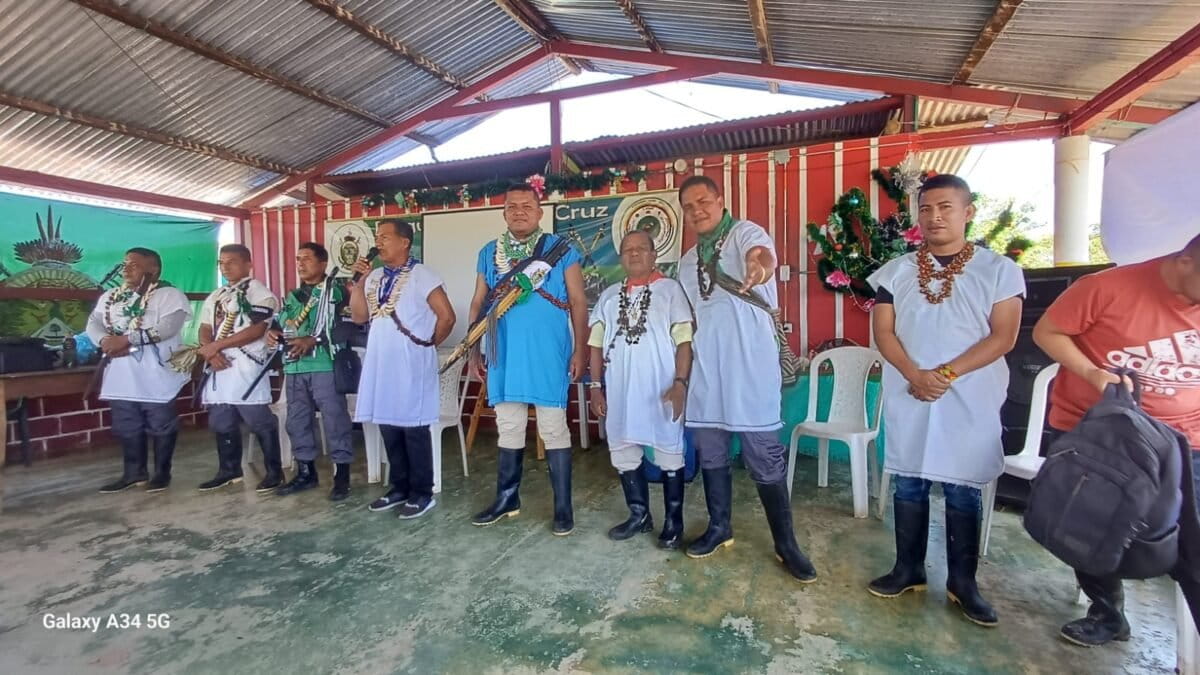
“Ayahuasca” is a Quechua term commonly used in Peru and internationally. “Yagé” or “Yajé” is the name used and defended by Indigenous peoples of the Colombian Southwest, including the Inga, Kamentsá, Siona, Cofán, and Coreguaje.
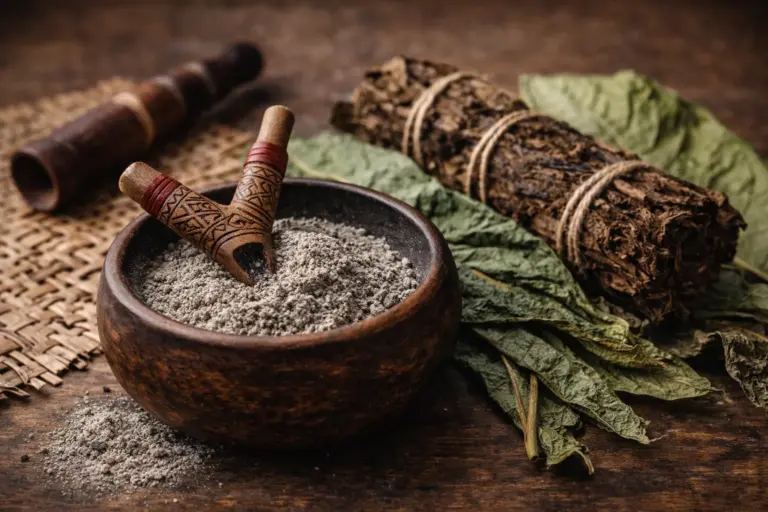
From a biological perspective, the medicine is centered on Banisteriopsis caapi, often combined with plants such as Psychotria viridis or Diplopterys cabrerana. But defining Yagé by chemistry alone misses the point entirely.
For its traditional custodians, Yagé is not a psychedelic, hallucinogen, or recreational substance. It is a living being. A teacher. A grandfather. A system of knowledge used for healing, community governance, spiritual clarity, and protection of territory.
This is why Indigenous councils in Colombia have explicitly rejected labeling Yagé as a drug. They describe it instead as ancestral knowledge that safeguards both human communities and the Amazon itself.
Yagé and Indigenous Traditions of Colombia
Yagé does not exist outside its people.
Its survival is inseparable from the survival of specific Indigenous nations in the Colombian Amazon, particularly in the regions of Putumayo and Caquetá.
- Inga and Kamentsá communities, rooted in the Sibundoy Valley and Putumayo, maintain distinct languages and traditions while sharing ceremonial relationships with Yagé.
- Siona communities, whose territory follows the Putumayo River, continue to defend their lands despite armed conflict and displacement, using spiritual practice alongside physical presence.
- Cofán and Coreguaje peoples are recognized as long-standing guardians of rainforest biodiversity and medicinal knowledge.
For these nations, territory is not property. It is a living spiritual geography. The forest, the people, and the medicine are one system.
When someone drinks Yagé in a traditional context, they are not entering a private psychological journey. They are stepping into a web of relationships, obligations, and responsibilities.
If that sounds heavy, good. It should. This is one reason we encourage people to slow down and learn the basics before doing anything else. A grounded place to begin is an Ayahuasca Safety Guide that lays out real screening, contraindications, and the kind of preparation responsible facilitators insist on.
The Taita: A Life of Service, Not a Title
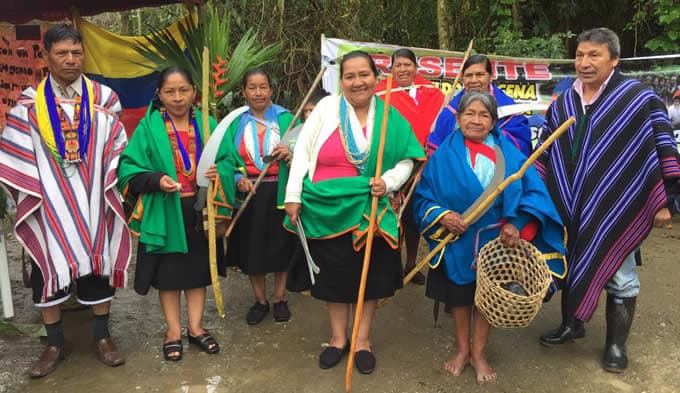
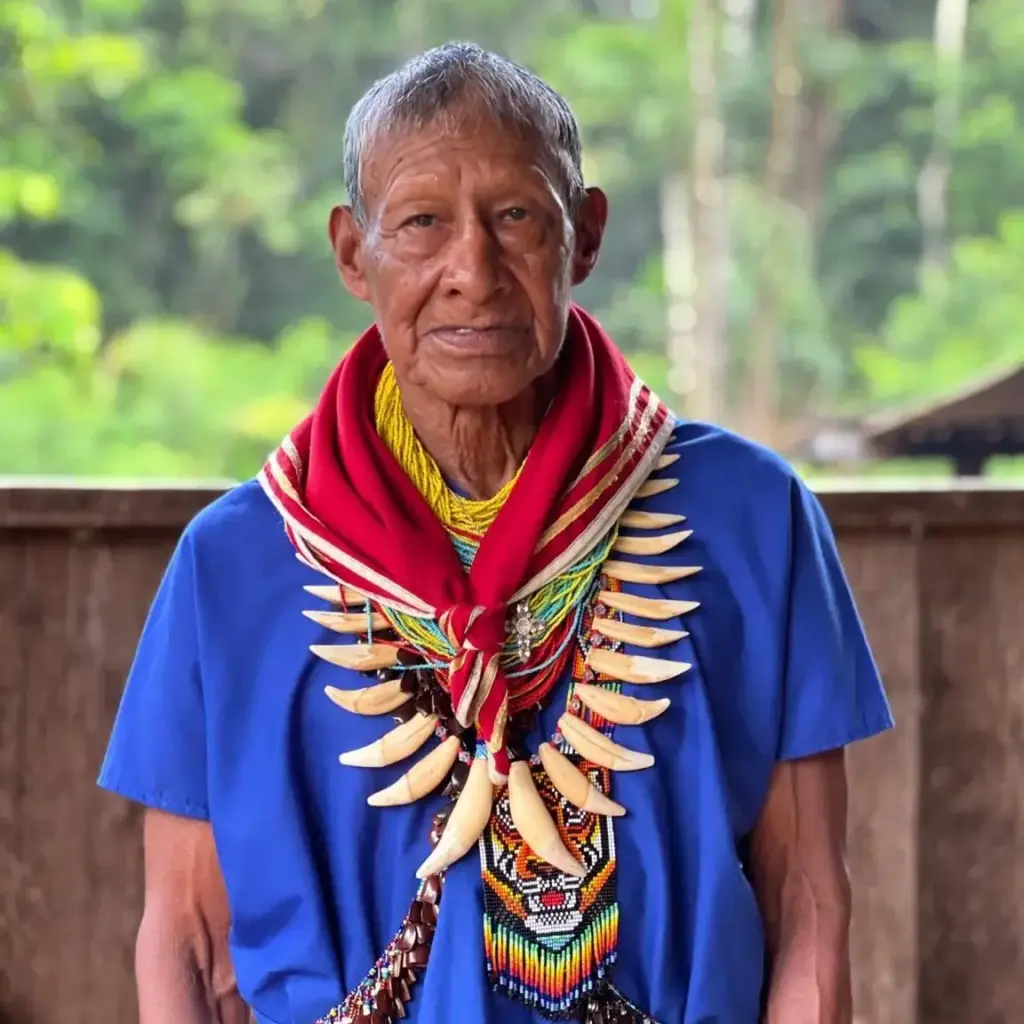
In the language of tourism, the word “shaman” is often used loosely. Within Colombian Indigenous traditions, the proper terms are Taita for men and Mami for women, meaning “father” or “mother.”
A Taita is never self-appointed.
Becoming a carrier of Yagé requires decades of disciplined service, not charisma or certificates. The path typically includes:
- Long-term apprenticeship, often beginning in youth, under the direct supervision of elders.
- Dietas and discipline, involving extended isolation, fasting, sexual restraint, and strict behavioral codes to build relationships with plant spirits.
- Community recognition, where authority is granted only after years of demonstrated ethical conduct and effective healing.
This stands in clear contrast to the modern phenomenon of facilitators claiming legitimacy after a handful of retreats. Traditional Taitas understand they are accountable not only to participants, but to their elders, their lineage, and the medicine itself.
The Ceremony: Silence, Song, and Restraint
A traditional Yagé ceremony rarely resembles the dramatic portrayals seen online.
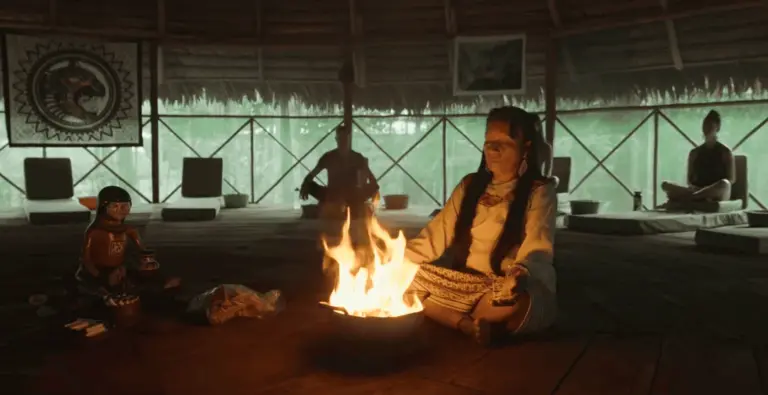
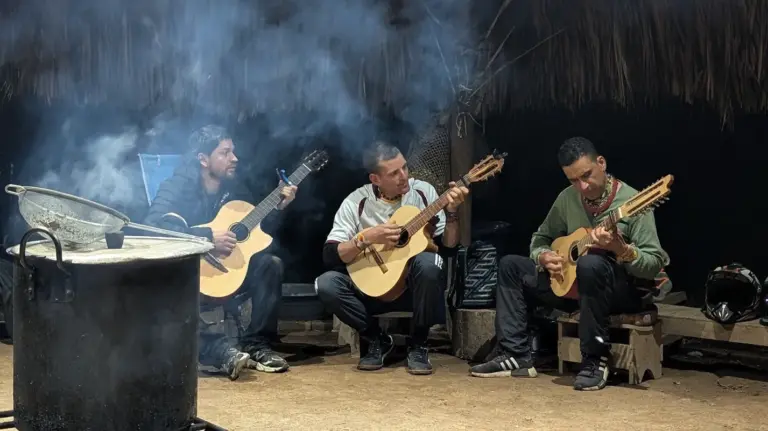
Ceremonies are typically held at night in a maloca, an ancestral ceremonial house. The space is structured through silence, prayer, and sacred music. Songs, harmonica melodies, and chants are not entertainment. They are tools used to guide, protect, and regulate the ceremony.
Preparation begins long before anyone drinks the medicine.
Cooking Yagé is itself a ceremonial act that can take days. Those tending the fire follow strict physical and emotional discipline, understanding that their state of mind shapes the medicine.
Participants are also expected to prepare seriously. This includes dietary restrictions, abstaining from alcohol and sexual activity, and maintaining mental focus. Purging, both physical and emotional, is understood as cleansing, not spectacle.
And if you’re reading this from a city like Medellín, it’s worth being direct. There are serious facilitators and there are opportunists. If you’re trying to orient yourself locally, the page on the Best Place to Drink Ayahuasca in Medellín exists to help you think clearly about context, safety, and legitimacy.
The goal is not visions. It is clarity.
A History of Resistance
To drink Yagé is to participate in a long history of survival.
During the early 20th century, Indigenous spiritual practices in Colombia were violently suppressed. Missionary campaigns in regions like Putumayo sought to eradicate languages, clothing, and ceremonial life, often branding Yagé as evil or demonic.
Many Taitas practiced in secrecy, risking punishment to preserve their knowledge. Through this resistance, Yagé became a tool of cultural survival, reinforcing identity and cohesion in the face of colonization.
Today, the threat has shifted. The danger is no longer outright prohibition, but extraction. As global demand grows, commercialization places new pressure on traditions never meant to be scaled or sold.
The Ethics of Participation
Given this history, approaching Yagé responsibly requires humility and discernment.
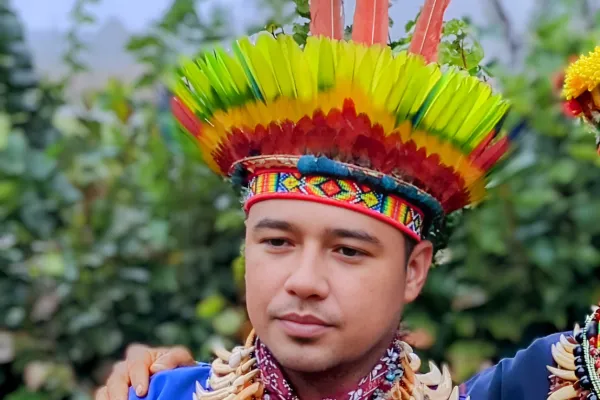
Indigenous organizations in Colombia have repeatedly warned against indiscriminate commercialization and impostors who adopt Indigenous aesthetics without authorization or accountability.
Ethical participation means:
- Verifying lineage, ensuring facilitators have real ties to Indigenous communities.
- Prioritizing safety, including medical screening, manageable group sizes, and clear boundaries.
- Respecting context, understanding you are a guest within a spiritual house, not a consumer.
- Rejecting guarantees, since traditional healing is a process, not a transaction.
If these elements are missing, something essential has already been compromised.
Our Approach at Camino al Sol
At Camino al Sol, we carry this history with seriousness.
We do not position ourselves as sellers of experiences. We act as a bridge to legitimate lineages, working exclusively with respected Taitas who are recognized by their communities.
Our work emphasizes preparation, safety, and integration. Ceremony is only one moment within a larger process. Real responsibility lies in how one arrives and how one lives afterward.
Every participant undergoes medical screening and receives guidance that honors both Indigenous tradition and modern safety considerations.
We are also honest about something people often resist hearing. The “big moment” is not the finish line. Healing unfolds in cycles, not straight lines. If you’ve felt that truth before, A Healing Journey Is Not a Straight Line will likely resonate.
If you want to understand who we are, how we work, and what we actually stand for, you can read About Camino al Sol.
The Medicine Is a Relationship
Yagé is not a shortcut.
It is a relationship with the earth, with oneself, and with a lineage that has endured pressures few can imagine.
When approached as a commodity, its teachings remain shallow. When approached with humility, discipline, and respect, it can become a lifelong teacher.
The medicine does not belong to us.
But when approached correctly, we may be permitted to learn from it.
If you feel called to explore this path with seriousness, begin by understanding the responsibilities it requires. Start with the Ayahuasca Safety Guide and take your time. That patience is part of the respect.